1. Quiz: Based on recent events in the novel, what do you think the novel is about now? Would you change your previous answer in the last quiz?
Last Quiz: 20 people handed in the quiz; 17 had completed all or most of the reading (85% of those present, 70% of those in course); 3 were behind in reading but had begun (15%); 4 people didn't take the quiz for whatever reason (16%). Those are pretty good numbers. If this holds for next quiz, I will reduce the overall number of quizzes for class for the next three weeks. Then I'll re-evaluate class discussion, performance, and participation.
2. Peer Review. See Directions.
3. Reading Groups. Review your contributions to the class based on questions from the last class.
Class goals have been updated.
a. Name the top eight plot events in the novel up to page 152.
b.
Establish who is and is not a 'sympathetic' character (who are we
supposed to identify with? What are we supposed to feel toward the main
characters? Why?).
c. Identify one passage (with page number) that is
about "the urban" experience in New York, and/or life in New York, at
the time the novel was written.
d. Identify two passages (with page number) that you believe offers insight into the overall 'meaning' of the novel.
4. Explain what you believe 'the novel is actually about.'
Wednesday, April 1, 2015

Peer Review Guidelines
Peer Review Guidelines
1. Move into your PR groups. Determine what paper will be read and discussed in what order. Budget 15 minutes per person and no more.
2. The readers all read the paper.
3. Give written feedback that offers specific praise and criticism based on whether or not the essay meets the assignment.
4. Put your name on this feedback and give it to the writer.
5. Keep your written feedback and staple it to your final draft.
Writing Feedback Directions
1.
Open with a general statement about the essay's relationship to the
assignment. Be clear about which parts fulfill the assignment and which
parts need improvement. When you make a specific, concrete suggestion
for improvement, try couching it in a qualifier: "You might try..." or
"Why don't you add..." or "Another way of writing the lead might be..."
2. Present comments so the writer knows which problems with text are most important and which are of lesser importance.
3. Pose at least two questions that ask for clarification or that seek other possible views or more information on the subject.
Attach written suggestions from your peers to your final drafts for full peer review credit.
Is this scholarship for you?
The Luce Heritage Language Scholarship is recruiting for the 2015-2016 academic year and we would love to get your recommendations for potential candidates. All majors are welcome!
At LaGuardia, the global is local: our students' diversity is their greatest asset. The Luce Heritage Language Scholars Program is a co-curricular program for LaGuardia's heritage language speakers-- students who are to some degree bilingual. The program nurtures a global perspective that strengthens students' confidence in their sense of identity while giving them tools to analyze and contribute meaningfully to an interdependent world. With the support of The Henry Luce Foundation, our program taps the potential of students by building upon their inherent linguistic abilities and cultural understanding.
Some of the benefits of the program include:
-A monthly stipend
-Individualized advising and mentoring
-Learning to communicate in English and the heritage language at a professional level
-Improving cultural awareness by attending plays, dance and musical performances, ethnic holiday celebrations, and dining out events
-Transfer guidance
-Professional skills development
-Summer internship either abroad or in the U.S
-Bilingual conversation partners
-Networking with business leaders, non-profit professionals, LaGuardia alumni and cultural experts
Eligible candidates:
-Are enrolled full-time at LaGuardia
-Are a heritage language speaker (to some degree bilingual)
-Have a 3.0 GPA or higher
-Can commit to 12 months with the program
To apply, please direct students to our website:http://laguardia.edu/Luce-ApplyNow/
Thank you for your help!
Monday, March 30, 2015
Sample outside paragraph
One
important perspective to consider is from the documentary film Life and Debt by Stephen Brown because in
its depiction of Jamaica’s national debt experience with austerity we see riots
over cuts to services like education. The experience of austerity is the
relevant idea to the nineteenth century riots because we see similar kinds of conflicts
between the government and the rioters. The documentary shows how Jamaica’s
experience with international loans brought the country into chaos and a
dependence on American markets as a result, for example. In the film, we see
riots after they did hard labor and then were fired from their jobs. The film
shows [summarize key scene]. One rioter says, “blanky blank,” meaning she
really believe4s asl;jfsdakl;fsda (Life
and Debt). Paraphrase [in your own words] the quote. The rioter in the film
reminds me of 1877 because___________. Al;ksdjflsdkafjsadkl;fsdakl. Asefsladjfsdlkfsd
. asdflkjasdfsadf.
Class Agenda 3.30
1. Quiz: Based on the events taking place in the novel, what is this novel "really about"? Use one or two events from the novel as evidence for your answer.
2. Let's look at part of the essay one assignment regarding integrating 'outside' perspective(s) into your paper. How can you use other texts/perspectives/frameworks to understand the riots we've studied and read about? How can you best integrate this paragraph into your thesis statement and essay?
3. Looking ahead to the Essay One Peer Review: BRING THREE COPIES of your draft.
4. Constructing paragraphs that employ evidence. Let's return to the college paragraph structure. Now let's build up a paragraph around a passage from The Destruction of Gotham as a model.
5. Reading Groups: Together with 2-3 other students, assemble into discussion groups for The Destruction of Gotham. In your groups, complete the following tasks:
a. Name the top five plot events in the novel up to page 92.
b. Establish who is and is not a 'sympathetic' character (who are we supposed to identify with? What are we supposed to feel toward the main characters?).
c. Identify one passage (with page number) that is about "the urban" experience in New York, and/or life in New York, at the time the novel was written.
d. Identify one passage (with page number) that you believe offers insight into the overall 'meaning' of the novel.
6. Explain what you believe 'the novel is actually about.'
7. Let's process some of your findings.
8. Return to the handout passage from class ("Reserve Army of Labour.")
2. Let's look at part of the essay one assignment regarding integrating 'outside' perspective(s) into your paper. How can you use other texts/perspectives/frameworks to understand the riots we've studied and read about? How can you best integrate this paragraph into your thesis statement and essay?
3. Looking ahead to the Essay One Peer Review: BRING THREE COPIES of your draft.
4. Constructing paragraphs that employ evidence. Let's return to the college paragraph structure. Now let's build up a paragraph around a passage from The Destruction of Gotham as a model.
5. Reading Groups: Together with 2-3 other students, assemble into discussion groups for The Destruction of Gotham. In your groups, complete the following tasks:
a. Name the top five plot events in the novel up to page 92.
b. Establish who is and is not a 'sympathetic' character (who are we supposed to identify with? What are we supposed to feel toward the main characters?).
c. Identify one passage (with page number) that is about "the urban" experience in New York, and/or life in New York, at the time the novel was written.
d. Identify one passage (with page number) that you believe offers insight into the overall 'meaning' of the novel.
6. Explain what you believe 'the novel is actually about.'
7. Let's process some of your findings.
8. Return to the handout passage from class ("Reserve Army of Labour.")
Structure Idea for the First Essay
Some students may find it helpful to use the following outline/structure as a template or model for the first essay assignment.
intro...
Thesis template: One commonality among the riots was _______________. On the one hand, the riots could be morally justified because ___________. On the other hand, one could argue ___________. One important perspective to consider is _______________________.
Paragraph[s]: One commonality among the riots was ___________. We see this in _____ and ________. [textual evidence: "direct quotation"]
Paragraph: The riots could be morally justified because ____________. [textual evidence: "direct quotation"]
Paragraph: the riots could be seen as immoral or not justified because ______________. [textual evidence: "direct quotation"]
Paragraph: One important perspective to consider is _______ because _____________. [textual evidence: "direct quotation"]
Conclusion: Based on my own life experiences I think/feel ________ because ___________ [provide evidence/reasons]
intro...
Thesis template: One commonality among the riots was _______________. On the one hand, the riots could be morally justified because ___________. On the other hand, one could argue ___________. One important perspective to consider is _______________________.
Paragraph[s]: One commonality among the riots was ___________. We see this in _____ and ________. [textual evidence: "direct quotation"]
Paragraph: The riots could be morally justified because ____________. [textual evidence: "direct quotation"]
Paragraph: the riots could be seen as immoral or not justified because ______________. [textual evidence: "direct quotation"]
Paragraph: One important perspective to consider is _______ because _____________. [textual evidence: "direct quotation"]
Conclusion: Based on my own life experiences I think/feel ________ because ___________ [provide evidence/reasons]
Wednesday, March 25, 2015
Class Agenda 3.25
1. Quiz 4.
What do you make of the novel so far? How would you characterize the plot? Who seem to be the main characters? What do you think is the most important event which occurs?
These quizzes are now open note, or open book if you can prove that you did the reading - proof consists of notes, annotations, sticky notes, or any other form of textual marking occurring throughout the extent of the assigned text.
Last Quiz: 36% did most or all of the reading; 8% did some of the reading; 32% didn't do the reading; 20% didn't take the quiz.
This result means that there will be quizzes for the next three classes. These quizzes will escalate in weight, with Quiz 4 counting as 10, Quiz 5 counting as 15, and Quiz 6 counting as 20 points. If less than 75% of the students continue to not read, all further quizzes will remain at 20 points. All future quizzes will be open-note or open-text subject to the conditions described above.
2. Responses to last quizzes: the size of the National Guard; the scope of the rioting, including non-railroad employees; the fact this took place 'pre' tear gas; the rioters were "regaining a right" (Francely); to what extent was the riot a reaction to the militia firing on the crowd (Kimberly); what is the purpose of burning buildings?; the size of the mob; the reason to 'deputize' men;
3. Images



Pittsburgh roundhouse
 destroyed railcars
 union depot burning
 communism as death: Thomas Nast
3. Writing Lab: Draft your working thesis and create an outline for the first essay assignment. Raise your hand if you need assistance.
Closer look: have a look at the visual materials provided by the professor.
4. Sharing ideas: Share your paper ideas with another student.
5. The Destruction of Gotham.
What do you make of the novel so far? How would you characterize the plot? Who seem to be the main characters? What do you think is the most important event which occurs?
These quizzes are now open note, or open book if you can prove that you did the reading - proof consists of notes, annotations, sticky notes, or any other form of textual marking occurring throughout the extent of the assigned text.
Last Quiz: 36% did most or all of the reading; 8% did some of the reading; 32% didn't do the reading; 20% didn't take the quiz.
This result means that there will be quizzes for the next three classes. These quizzes will escalate in weight, with Quiz 4 counting as 10, Quiz 5 counting as 15, and Quiz 6 counting as 20 points. If less than 75% of the students continue to not read, all further quizzes will remain at 20 points. All future quizzes will be open-note or open-text subject to the conditions described above.
2. Responses to last quizzes: the size of the National Guard; the scope of the rioting, including non-railroad employees; the fact this took place 'pre' tear gas; the rioters were "regaining a right" (Francely); to what extent was the riot a reaction to the militia firing on the crowd (Kimberly); what is the purpose of burning buildings?; the size of the mob; the reason to 'deputize' men;
3. Images
Homeless sleeping in police station
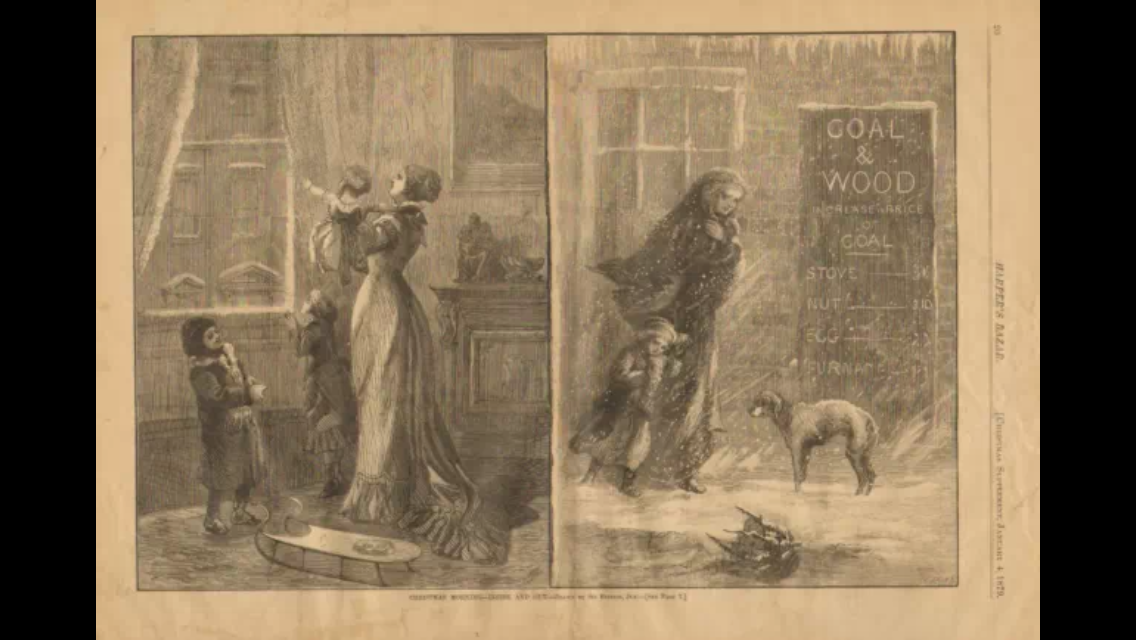
Rich and poor family side by side
Poor child
Policeman and abandoned child
3. Writing Lab: Draft your working thesis and create an outline for the first essay assignment. Raise your hand if you need assistance.
Closer look: have a look at the visual materials provided by the professor.
4. Sharing ideas: Share your paper ideas with another student.
5. The Destruction of Gotham.
Subscribe to:
Posts (Atom)